Sports PR pros have never had more ways to reach an audience, or more ways to be ignored.
Leagues now distribute games across traditional networks, streaming services and digital channels. Athletes are launching production companies and podcasts while connecting directly with fans. Journalists and broadcasters are building personal brands that reach beyond their original platforms. Meanwhile, women’s sports are surging, and established properties are pursuing new audiences without alienating longtime fans.
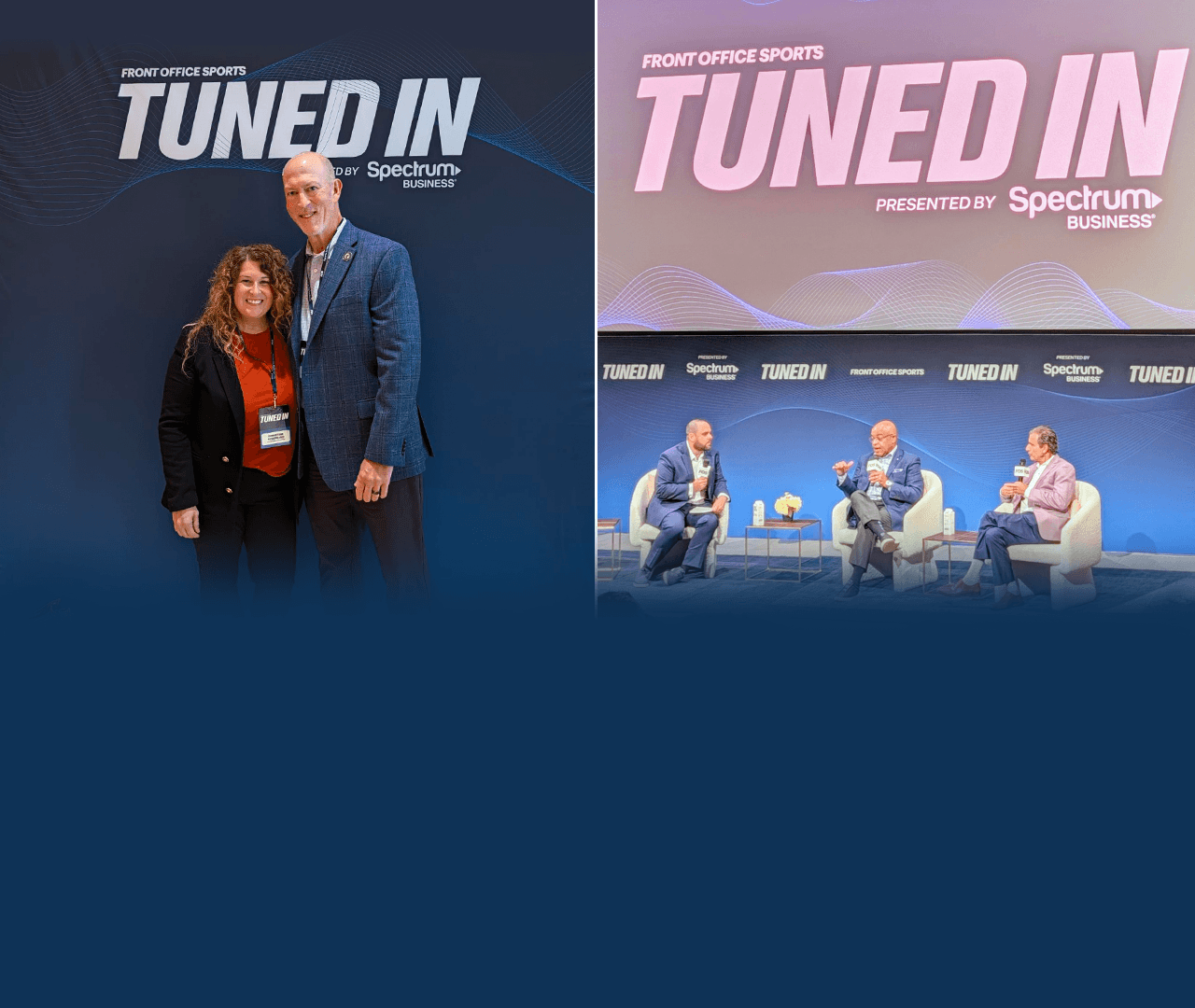
These shifts were on display at Front Office Sports’ Tuned In 2026 conference in New York City, where commissioners, media executives, journalists, broadcasters and creators discussed the changing sports media landscape.
The discussions covered media rights, streaming, audience growth, athlete-driven storytelling, women’s sports and the future of sports journalism. But the most useful takeaway for communicators was broader than any individual platform or media deal. Audiences still respond to stories that matter to them, told by people they believe.
In a fragmented sports media environment, effective communication depends less on appearing everywhere than on earning attention through credible voices, meaningful stories and deliberate channel choices.
Distribution is not the same as strategy
Many of the conversations at Tuned In reflected the growing number of ways fans can now access sports content.
The NFL is expanding its presence across digital platforms. ESPN is thinking about how studio programming can move across linear television, apps and social channels. MLS has been an early adopter of streaming distribution. The NWSL is navigating a growing collection of media partners and platforms as the league builds its audience and commercial value.
Organizations can now reach people in more places than ever, but more distribution doesn’t automatically create more connection.
NWSL Commissioner Jessica Berman was candid about fragmentation: “This is not a problem we created, but certainly it’s a dynamic we’re participating in.” Hans Schroeder, executive vice president and chief media officer of the NFL, described the importance of choosing platforms with scale and established audiences. For communicators, that shifts the question from where a story can appear to where it will matter most to the audience we want to reach.
For brands, that means resisting the temptation to treat every channel as interchangeable. A story may require a different format, voice or point of emphasis depending on whether it appears in a news article, podcast, social video, newsletter or executive interview.
The role of the communicator is to help make those choices, not simply distribute more content. That starts with a channel plan, not a media list: identify the outlet or format best suited to the story, build the pitch around it and adapt from there. A creator-led show, for example, requires an angle worth exploring and a guest who can sustain a real conversation, not simply a press release with a canned quote.
Trust is built through daily deposits
Amazon Prime Video’s @TaylorRooks put it this way: “Trust really is this daily deposit, both with the audience and with the person that you’re interviewing.”
The same is true in communications, where trust is often discussed as an outcome but works more like a process.
It is built through preparation. It is built by understanding a reporter’s work before reaching out, giving a spokesperson the confidence to answer difficult questions honestly, delivering useful information, respecting deadlines and treating relationships as more than transactions.
Trust also determines who gets invited into important conversations. Rooks, who has close friendships with several of the NBA stars she covers, said those relationships make it easier to ask hard questions. “It’s about honesty,” she said. “Those questions are fair. Your story is your story.”
For PR professionals, access may open a door, but credibility determines whether the door stays open. That makes relationship-building part of the daily work, not something saved for launch week. Know what a reporter or host has covered recently before pitching them. Offer useful context even when there’s nothing to promote. And be direct about what you can and can’t share. Those deposits pay off when the story is difficult.
Distinctive voices matter more than ever
The same principle applies to personality and point of view.
@PabloTorre, host of Pablo Torre Finds Out, said he wants his audience “to feel like they are eavesdropping at a table where something real and unplanned is happening.” Chris Berman reflected on the enduring appeal of NFL Primetime and the way its distinctive presentation helped make football accessible and memorable for generations of fans. Elle Duncan, who left ESPN for Netflix, said she built her profile by being versatile, not loud: “I did not believe that I would stand out by being inflammatory.”
Each example reflects the same broader shift: audiences connect with perspective as much as with information.
For organizations and brands, the stakes are clear. In a crowded media environment, a generic message delivered by an interchangeable spokesperson is unlikely to travel very far. The strongest communications programs identify the people who can make a subject more understandable, more credible or more compelling.
That person may be a senior executive, an athlete, a customer, an independent expert or an employee with direct experience. Title matters less than whether they have a real point of view and can express it with authority.
The communicator’s job is to find that voice, prepare it and put it in the right context.
Preparation has to evolve, too. Traditional media training built around three message points doesn’t hold up over a long, unscripted podcast conversation. Spokespeople need stories, specific examples and the confidence to answer honestly when the conversation goes somewhere unexpected.
At Coyne PR, we’ve seen how much athlete voices can do for a sport looking to grow. Our work with USA Weightlifting ahead of the LA28 Olympic Games centers on athlete storytelling, spotlighting Olympic hopefuls and standout athletes, and pairing national outreach with hometown media. Those stories have helped introduce Olympic weightlifting to broader lifestyle and mainstream audiences.
Growth should not come at the expense of meaning
Josh Pate, host of Josh Pate’s College Football Show, and John Fanta of NBC Sports discussed the future of college football and the concern that commercial growth could weaken the qualities that make the sport distinctive. NASCAR CEO Steve O’Donnell spoke about the sport’s efforts to attract new fans while continuing to serve the people who have supported it for decades. LPGA Commissioner Craig Kessler described the tour’s strategy as a “healthy mix of innovation, trying new things, but also honoring our past.”
The tension is familiar to organizations pursuing growth. Growth lasts when it stays connected to purpose.
Organizations often want to reach new audiences, enter new markets or modernize their image. Those goals matter. But they should not require abandoning the existing relationships and meaning that give the organization its credibility in the first place.
Effective communication helps an organization evolve without losing its identity.
Coyne PR faced a version of this challenge in launching the Sumo Championship League (SCL), America’s first professional sumo league. A new league built around one of the world’s oldest sports could easily have been covered as a novelty. Instead, the campaign positioned SCL as a legitimate professional property that honors sumo’s tradition while creating a live entertainment experience for American audiences, with the story tailored for sports, business, entertainment, lifestyle, and combat sports media. The launch helped build momentum for athlete recruitment, venue announcements and partnerships ahead of the inaugural season.
The opportunity for communicators
The sports media landscape will continue to become more complex. More platforms will emerge, more athletes will become creators, and more media personalities will build independent brands. Leagues will keep experimenting with distribution, programming and storytelling.
That complexity raises the value of strategic communication.
The opportunity for PR professionals is to help organizations answer a series of increasingly important questions:
- What is the story?
- Why does it matter now?
- Who is best positioned to tell it?
- Which audience needs to hear it?
- Where will that audience be most receptive?
- And how can the organization communicate in a way that earns attention rather than simply requesting it?
The organizations that win will be the ones that understand their audiences, develop credible voices, tell stories with meaning and build trust before they need to rely on it. Volume and reach help, but they can’t do that work on their own.
The tools will keep changing. The fundamentals won’t, and the communicators who master both will be the ones audiences, reporters and athletes trust most.
If your organization is navigating fragmented sports media, evolving audiences or the challenge of finding the right voice for a story, we can help. Learn more about Coyne PR’s sports practice.
Updated as of November 2026