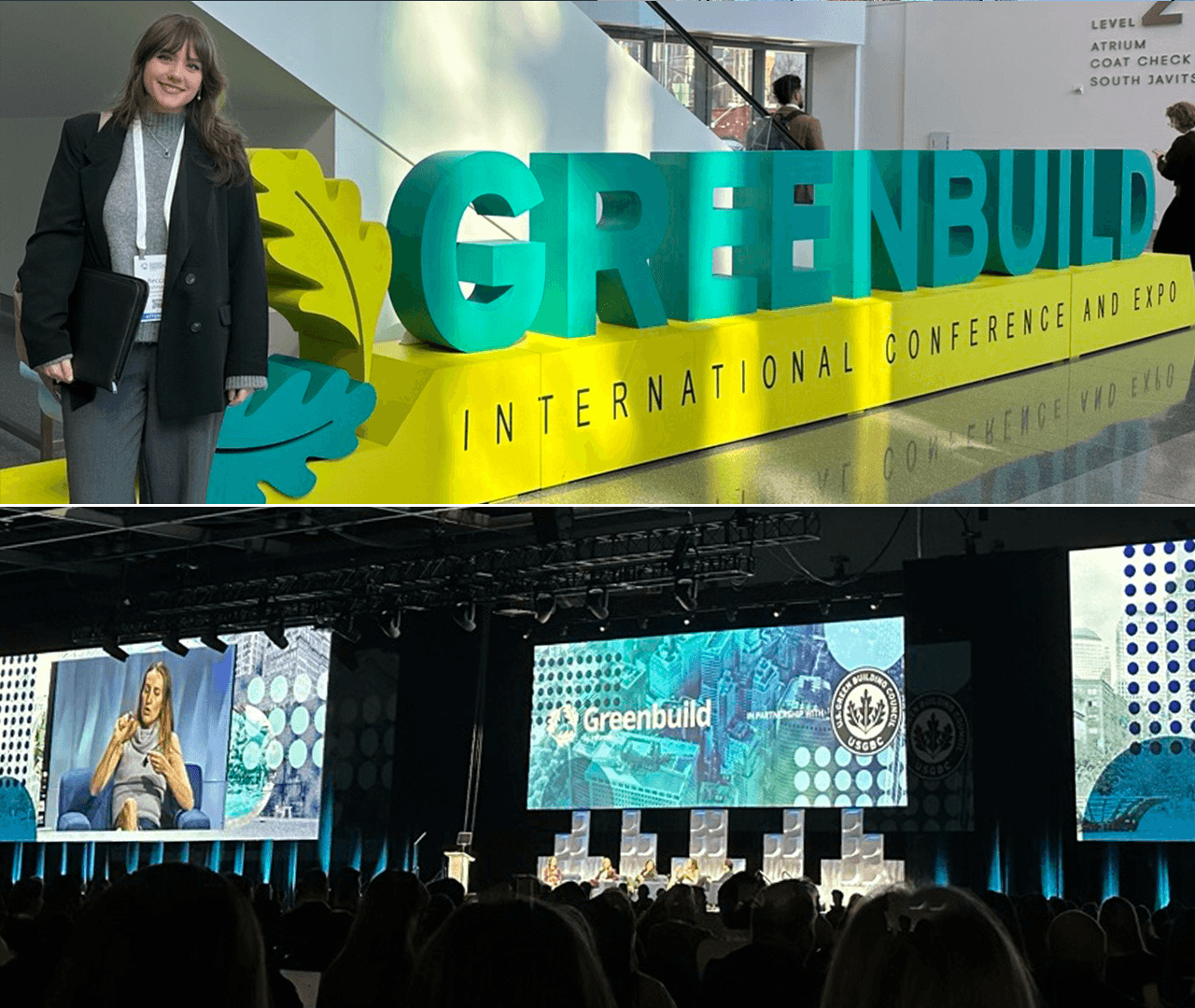
As part of Coyne PR’s B2B team, I work with companies across the built environment, including construction, HVAC, building codes and plumbing. Attending the 2026 Greenbuild International Conference and Expo gave me the opportunity to hear directly from architects, engineers, building scientists, manufacturers and other professionals shaping the future of the industry.
Across my conversations, one theme kept surfacing: sustainable and resilient buildings depend on coordinated decisions made early in the design and planning process.
That means considering energy efficiency, material selection, embodied carbon, climate risk, durability and long-term performance together rather than treating them as separate priorities.
Sustainable Building Starts With Early Planning
One of my biggest takeaways from Greenbuild was that sustainability and energy efficiency need to be addressed early in the design process. They cannot be added at the end of a project once construction is already underway.
As these goals become more important to owners, developers and project teams, they need to be reflected in project requirements, specifications and budgets from the beginning. That requires architects, engineers, contractors, owners and material experts to be part of the conversation early enough to make informed decisions.
Early coordination also gives teams more time to:
- Identify and source sustainable materials
- Understand regional material availability
- Evaluate costs and performance
- Account for project schedules
- Consider realistic alternatives when an ideal solution is not available
Several discussions emphasized that sustainability does not have to be an all-or-nothing decision. If a preferred material or solution is not feasible, the goal should be to find the best available alternative that keeps the project as close as possible to its original performance targets.
That mindset is especially important as data center construction continues to expand. Data centers have significant energy demands, while their compressed construction schedules leave less time to revisit decisions later in the process.
Site selection also adds another layer of complexity, requiring project teams to consider climate risk and water use alongside factors such as power availability and grid resilience. Given the multitude of factors involved, decisions regarding materials, embodied carbon, operational performance and resilience need to be made before construction begins.
Data Centers Show Why Connected Decisions Matter
Data centers are a clear example of how quickly individual project decisions can affect long-term building performance.
Their energy demands, material requirements and accelerated timelines create a complicated set of considerations for owners and project teams. Decisions made early can affect everything from a building’s operational efficiency to its ability to withstand future shifts in climate conditions.
When there is limited time to evaluate alternatives, project teams need a clear understanding of their priorities from the start. That includes identifying which performance goals are essential, where flexibility exists and how different decisions may affect the building over time.
This is not only a sustainability issue, but also a question of resilience, reliability and long-term investment.
Sustainability Is Also a Conversation About Resilience
Another theme that stood out at Greenbuild was the connection between sustainability and resilience.
The conversation is no longer limited to reducing carbon emissions. Buildings also need to be designed and maintained with future conditions in mind, including increasingly extreme heat, flooding, storms and wildfires.
A resilient building must protect the structure, the people who use it and the business or community that depends on it. That means project teams need to think beyond historical weather patterns and consider the conditions a building may face over its lifespan.
Retrofitting existing buildings is an important part of that conversation, as extending the life of an existing structure can be a more sustainable option than demolishing and rebuilding. It can also help owners improve efficiency, address climate risks and preserve the value of an asset.
Resilience is therefore not just an environmental concern. It is also tied to:
- Long-term operating costs
- Property value
- Business continuity
- Building longevity
- Investment decisions
A building that performs well over time is better positioned to remain operational, maintain its value and support the people and businesses inside it.
Building Performance Depends on the Whole System
One panel I attended emphasized the importance of looking at a building as a complete system.
Individual products and materials can perform exceptionally well on their own, but that performance can be compromised when the components do not work together. Energy efficiency, sustainability and durability depend on how the building’s structure, materials, envelope and mechanical systems interact.
Material selection is one part of that equation. While construction materials such as concrete can have a relatively low carbon impact individually, the significant quantities required across large projects can make them large contributors to a project’s embodied carbon, making material quantities, environmental product declarations and lower-carbon alternatives important considerations during design and procurement. Resources such as the Carbon Leadership Forum’s model embodied carbon specifications and its Embodied Carbon in Construction Calculator can help project teams evaluate those decisions.
Once a building is in operation, the building envelope becomes increasingly important to energy performance. Roofing, insulation, air sealing and moisture management can help reduce heating and cooling demands.
The Department of Energy’s guidance on building envelopes reinforces the importance of insulation continuity, air barriers and moisture management in supporting energy efficiency.
Transitions within the envelope also deserve attention, as roof-to-wall connections, penetrations and other junctions can create gaps in performance if they are not properly designed and installed. Durability also matters, with moisture intrusion or premature material failure potentially reducing efficiency and leading to repairs, replacement or disruption over time.
The larger takeaway is that a building’s performance cannot be understood by looking at one product or system in isolation. The parts need to work together.
What These Conversations Mean for B2B Communications
For B2B PR professionals, the value of attending Greenbuild goes beyond developing a better understanding of the built environment.
Hearing directly from industry professionals gave me a clearer view of the technical challenges, business priorities and questions shaping the conversations our clients want to join. That context helps me identify where a client or subject matter expert can contribute something genuinely useful.
It also makes it easier to develop stories that reflect what audiences are actually thinking about, whether that is:
- How to balance sustainability goals with project realities
- How to prepare buildings for more extreme weather
- How to make informed material decisions
- How to improve the performance of existing buildings
- How to connect technical innovation to long-term business value
The strongest B2B communications are grounded in a real understanding of the industry. They do not simply repeat broad claims about sustainability or innovation. They address the specific challenges professionals are facing and offer a perspective that helps move the conversation forward.
Greenbuild reinforced that the future of sustainable construction will depend on early coordination, realistic decision-making and a willingness to look at buildings as connected systems.
For communicators, that means taking the time to understand not only what an industry is talking about, but why those conversations matter to the people making decisions.
Updated as of November 2026